
The complete guide
A Practical Guide to Choosing Foil Survival Blankets
When a small backup covering makes sense
Cold can become a problem when plans change. A walk takes longer than expected, an outdoor event runs into the evening, or someone needs to wait for help. A normal blanket may be too bulky for the bag you have with you. A compact emergency blanket gives you another way to cover the body without carrying a large fabric throw.
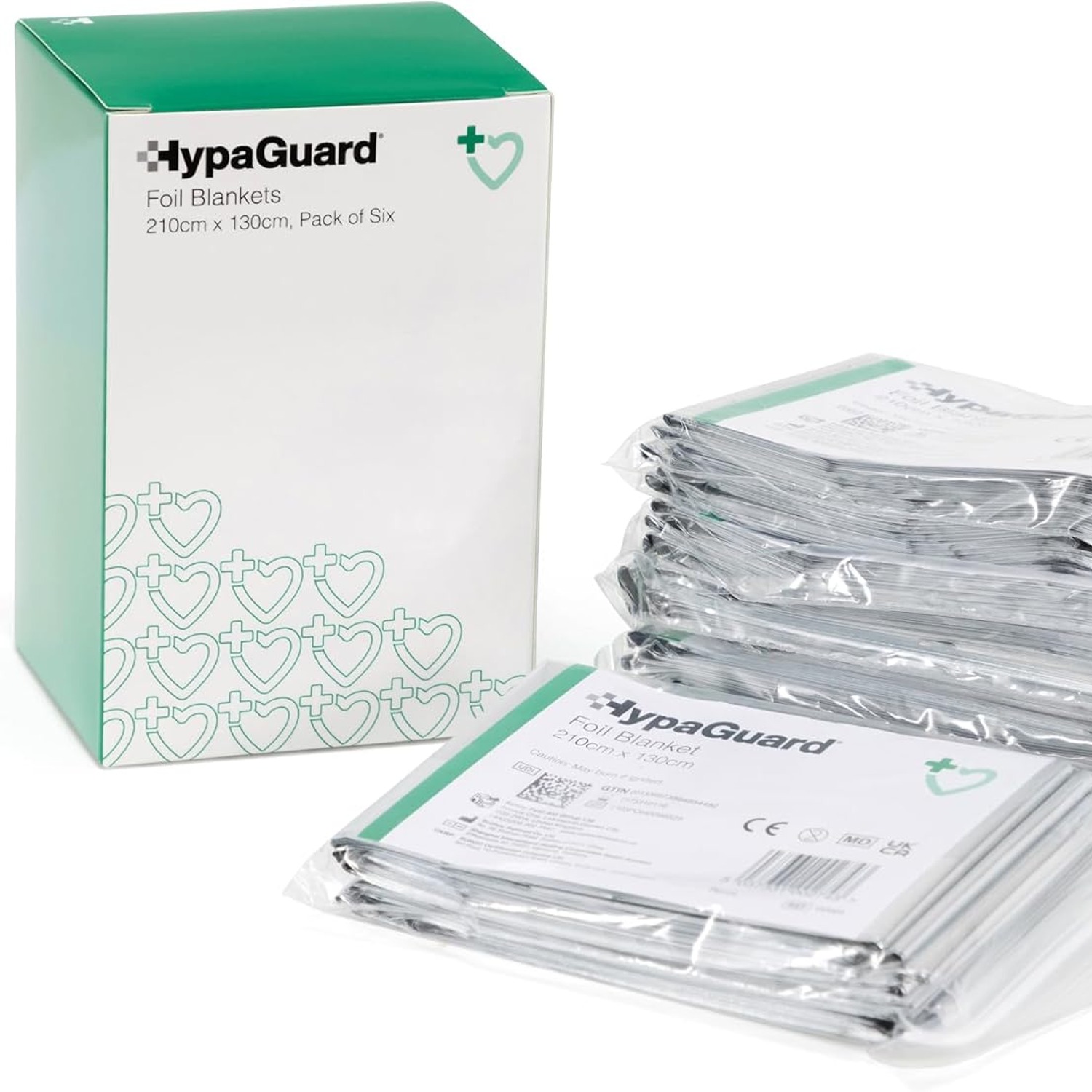
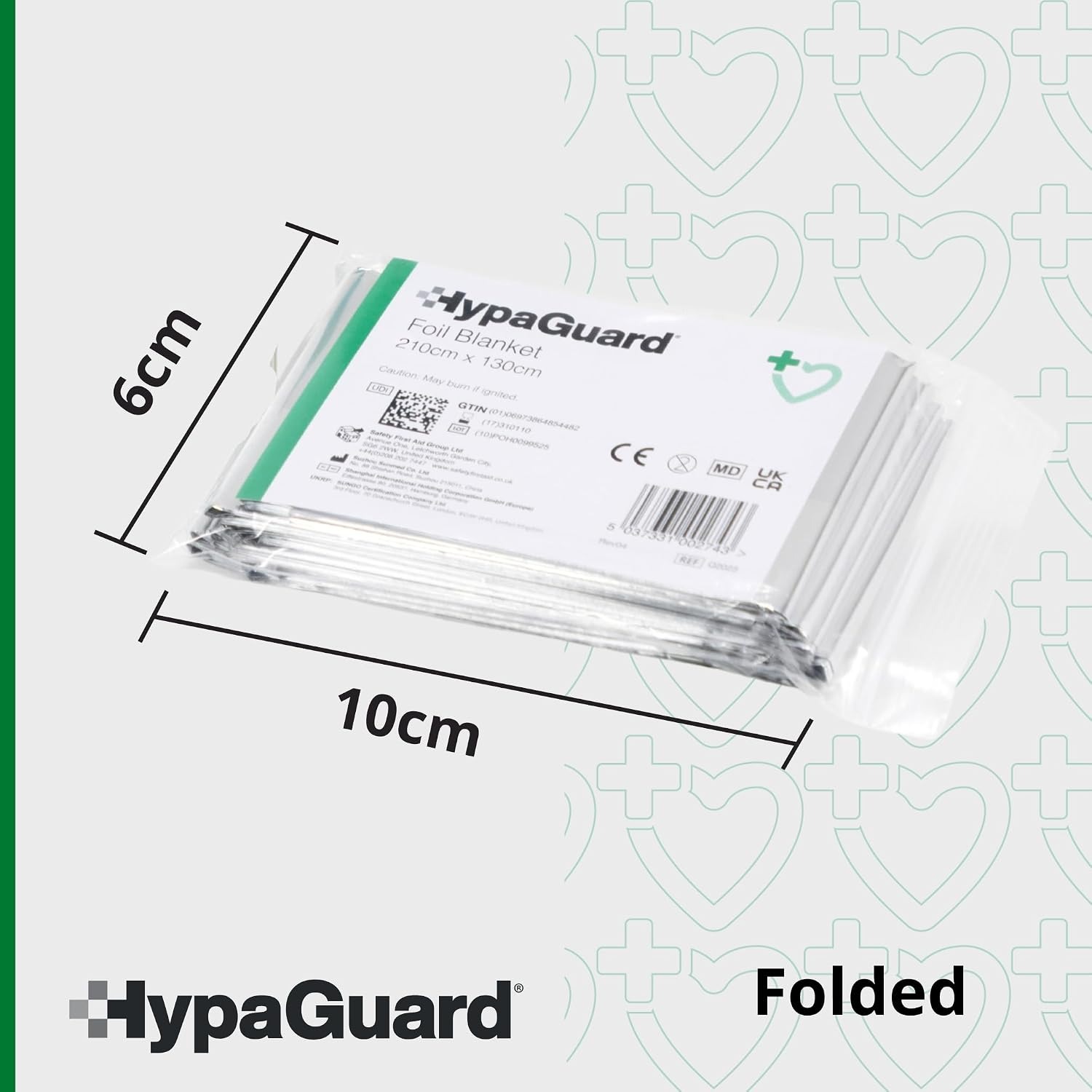
The HypaGuard pack contains six individually wrapped foil blankets. Each opens to 210 cm by 130 cm and folds to a stated 10 cm by 6 cm. That makes this pack worth considering for first aid supplies, hiking bags and shared outdoor equipment.
It helps to be clear about its job. This is a reflective emergency covering. It is not everyday bedding, a sleeping bag or medical treatment. Buy it as one part of a sensible plan for warmth, not as the whole plan.
How a reflective blanket works
A foil blanket works differently from a thick quilt. The Mylar surface reflects body heat back towards the wearer. It does not generate warmth, and there is no battery, heating element or power connection.
These blankets use a reflective Mylar surface. They do not generate their own heat.
Coverage and the wider situation still matter. A person waiting outdoors may also need shelter, dry clothing and help. If someone appears seriously cold or unwell, seek medical advice or emergency assistance rather than waiting to see whether a blanket solves the problem.
Think of a reflective thermal blanket as a tool with a focused purpose. Its appeal is the combination of a small stored size and a much larger covering once opened.
What comes in this pack
There are six HypaGuard foil blankets in the box, each wrapped separately in a sealable pouch. You do not need to open the entire supply to take one with you.
That gives you a choice in how to store them. You might keep the box beside shared first aid equipment. Alternatively, you could divide the packets between outdoor bags and leave the remaining blankets with household supplies.
Do not confuse the pack quantity with the unfolded size. Each of the six blankets measures 210 cm by 130 cm. The 10 cm by 6 cm measurement refers to a folded blanket, not the full box.
A per-blanket weight and a folded thickness are not confirmed in the product details. If your packing list depends on an exact weight or a tight storage space, check those details before buying.
Check coverage before choosing
Measurements are more helpful than a broad description such as full size. At 210 cm long and 130 cm wide, this blanket provides a rectangular sheet that can be placed around the body.
How much it covers depends on the person and how it is arranged. Length alone does not tell you whether there is enough width to wrap around someone's clothing comfortably. Compare both figures with the way you expect to use it.
For a first aid blanket, easy access matters as much as dimensions. A suitable blanket buried beneath a full bag is harder to reach when someone needs it. Decide where the packet will live before adding it to your supplies.
For group plans, think about how many people may need a covering at the same time. Six packets offer more flexibility than one, but the right quantity depends on the group rather than the size of the box.
Where it fits in a first aid kit
The product description lists first aid uses involving shock and hypothermia. In that setting, the blanket is a warmth-support item. It does not diagnose a condition, treat the cause of shock or replace trained help.
Keep it with supplies that other people can find. If several people share a kit, let them know where the blanket packets are stored. Clear organisation can be more useful than owning equipment that nobody remembers is there.
When using a blanket around an injured or unwell person, keep the face and airway clear. Avoid unnecessary movement and follow the advice of emergency services or a trained first aider.
Suspected hypothermia or medical shock needs urgent attention. Do not delay getting help while searching for equipment or trying to make a covering fit perfectly.
Choosing it for camping and hiking
Camping and hiking are listed uses for this product. The small folded format makes a Mylar survival blanket a practical item to consider when putting together backup supplies.
For camping, keep its role separate from your sleeping setup. Your sleeping bag and other equipment should suit the expected conditions. A foil covering is not evidence that a lighter sleeping bag will be adequate.
For walking, consider who carries the emergency supplies. A single shared kit may be less useful if members of a group become separated. Individually wrapped blankets let you distribute packets where appropriate, while keeping unused ones closed.
There is no need to build an outdoor plan around one product. Start with suitable clothing, the expected weather and the length of the trip. Then decide where a hiking emergency blanket fits among the other items you need.
Outdoor events and waiting around
Cold is not limited to remote places. Sporting events and outdoor concerts are also listed uses for these blankets. Long periods of sitting or waiting can make an extra covering welcome.
An outdoor event blanket needs to fit the event as well as your bag. Check the organiser's rules for items you can bring, and think about whether you need ordinary warm layers for the whole day.
This foil option is most useful to consider when storage space is limited and you want a backup covering. It is a different choice from a comfortable fabric blanket intended for regular use.
If you are packing for several people, decide whether each person should carry a packet. The individual pouches make that possible without opening blankets that may not be needed.
Understand water resistance
These blankets are listed as water resistant. That is not the same as a waterproof rating, and no detailed weather-testing information is supplied.
Do not assume a silver foil blanket can replace waterproof clothing, a tent or another suitable shelter. The product details do not establish those uses.
The distinction matters when comparing products. A buyer looking for a rain covering has a different need from someone adding reflective warmth support to a kit. Choose according to the job you actually need done.
The same applies to comfort. A thin foil sheet will not serve the same role as padded or fabric bedding. Its compact format is useful, but it comes with a different purpose.
Opening and handling the blanket
Before you need it, read the instructions on the supplied packaging. Knowing where to open the pouch and how the blanket unfolds can make it easier to use calmly.
Open it gently and give yourself enough room to spread it out. Keep it away from sharp equipment that could catch the sheet. Inspect it for damage before relying on it.
The product details do not state which side should face the body. Follow the packaging rather than advice intended for a different blanket.
A sealable pouch does not, by itself, confirm unlimited reuse. If you plan to repack an opened blanket, check the manufacturer's instructions first. Replace damaged supplies rather than counting them as ready-to-use kit.
Care, storage and regular checks
Keep unopened packets dry and away from direct heat and sharp objects. Choose a storage place that is easy to reach, not just one where the box happens to fit.
Check your emergency supplies from time to time. Look for damaged pouches and make sure blankets used on previous trips have been replaced. A pack of six can gradually become a pack of two without anyone noticing.
The scraped product details include a machine-wash care entry, but no temperature or washing method is given. For a thin foil product, confirm the actual packaging instructions before washing. Do not assume it can follow the same care routine as a household blanket.
No shelf life is specified in the product details. Check for any dates or storage guidance on the delivered product and keep that information with your supplies.
Buying the right quantity
A survival blanket multipack suits buyers who want several separate coverings rather than one loose item. The useful question is where each packet will go.
You may need a few together for shared equipment, or separate packets for different bags. Allocate them before ordering so you can judge whether six is enough.
Our returns policy explains cancellation and faulty-goods support. Your statutory rights are unaffected. If you need the blankets for a particular trip or event, confirm the delivery estimate before making them part of your plans.
The short version
HypaGuard foil survival blankets offer six compact, individually wrapped Mylar coverings. Each unfolds to 210 cm by 130 cm and is intended to reflect body heat towards the wearer.
Choose this pack for backup warmth support in first aid supplies or outdoor kits. Check coverage, store the packets where they are easy to find, and keep suitable clothing, shelter and medical help central to your plans.