
The complete guide
Choosing a Safety Whistle for Your Outdoor Kit
A voice is not always the signal you want to rely on when trying to attract attention outdoors. A whistle gives you another way to make a sound. Before adding one to your kit, though, it is worth being clear about what that sound can and cannot do.
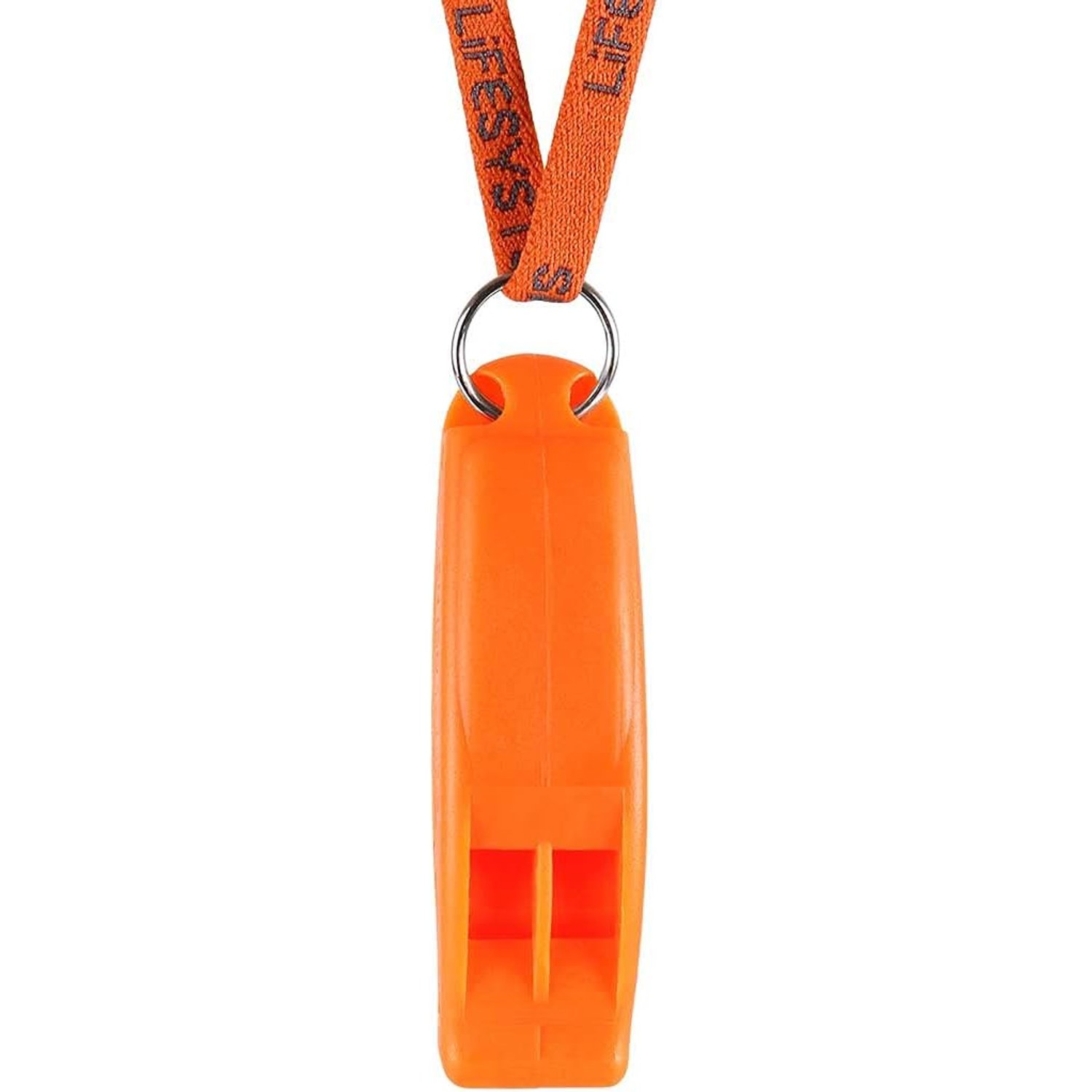
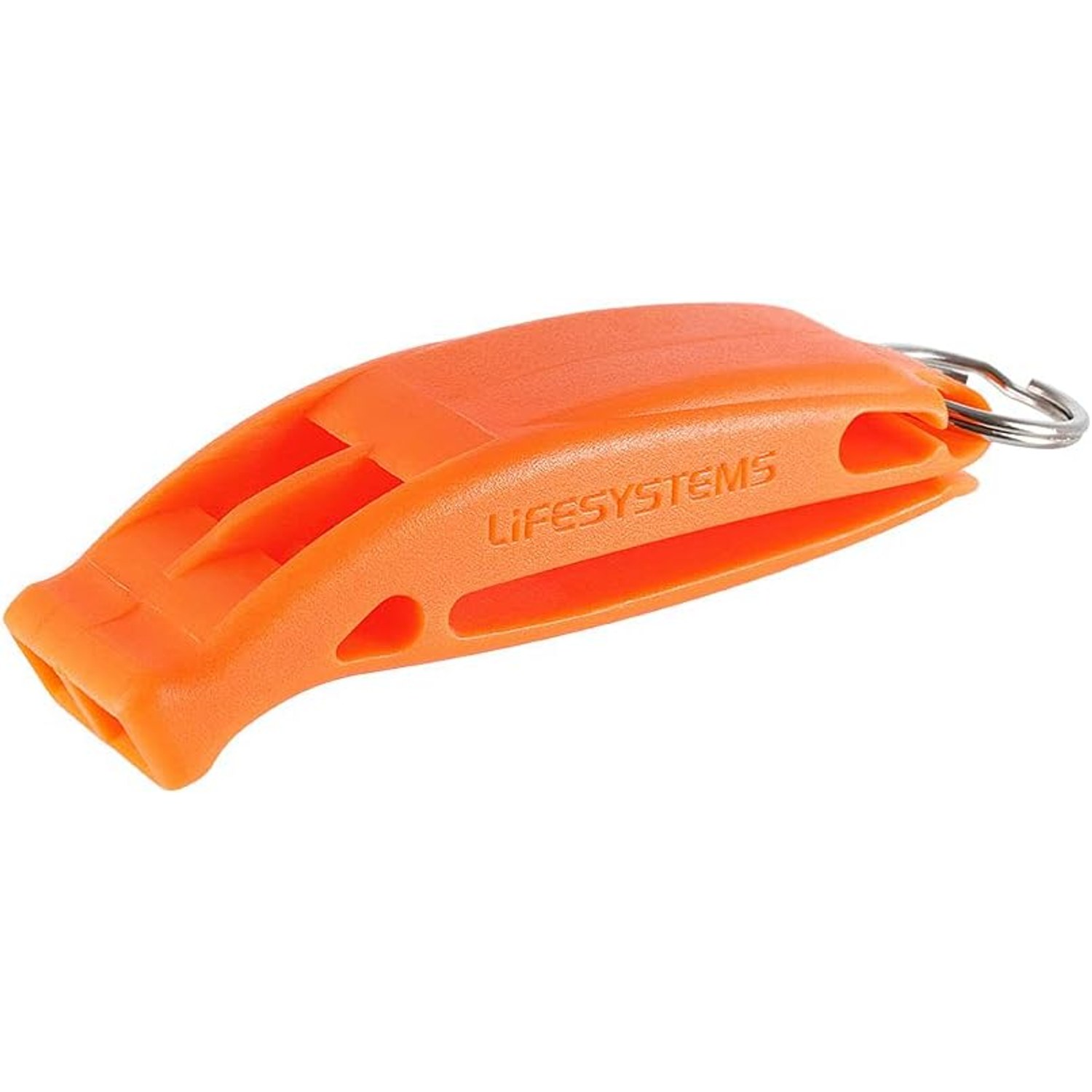
The Lifesystems Safety Whistle, Orange is a manually blown audible signalling whistle. It is non-electronic, and the model is identified as 2250. Its purpose is straightforward: blow into it to make a signal that someone may hear.
It does not contact emergency services, locate you or guarantee rescue. Thinking of it as one part of a plan, rather than the whole plan, helps you decide whether it belongs in your bag.
What this safety whistle does
This whistle turns your breath into an audible signal. There is no electronic alert to activate and no message to compose. You need to be able to reach it and blow into it when you want to make a sound.
That simple action is the main reason to consider a manually blown whistle. It gives you a signalling option that does not depend on an electronic connection. It does not, however, give you the functions of a phone, radio or locator.
Keep that distinction clear when choosing outdoor equipment. Two items can both be described as emergency equipment while doing very different jobs. An emergency signalling whistle makes sound. It cannot explain what has happened, pass on a location or confirm that help is coming.
Understand the limits before choosing
There is no stated decibel level for this product and no guaranteed hearing distance. That means you cannot use this listing to calculate how far away another person might hear a signal.
Avoid treating any whistle as a promise that someone will notice you. Sounding it and getting a response are separate events. If you hear no reply, the whistle cannot tell you whether anyone heard it.
There is also no rescue guarantee. That may seem obvious, but it matters when deciding how much responsibility to place on a small piece of equipment. Choose your communication arrangements around the trip itself, not around an assumed whistle range.
An outdoor signal whistle can be worth considering without making claims about performance that are not supplied. Its stated role is enough to explain what it offers.
Who might consider this whistle?
Someone assembling a walking kit may want a separate audible signalling option. A hiking whistle can also be considered by people reviewing how they would try to attract attention if separated from their companions.
For group outings, the useful question is not simply whether everyone has a whistle. It is whether the group has discussed its use. People need to know when a signal might be made and what they should do if they hear one.
If you are buying for an organised activity, check its equipment requirements first. This product has no stated activity-specific approval. Do not assume that the name “safety whistle” means it meets every club, event or workplace requirement.
For children, age suitability is not specified. Read the supplied guidance and assess the product and carrying method before giving it to a child.
Check the details that matter to you
The known details are limited but clear. This is a Lifesystems whistle, described as orange and identified as model 2250. It is manually blown and produces an audible signal without electronics.
Material, dimensions and weight are not specified. Those gaps matter if you have a precise requirement. For example, a whistle intended for a fitted holder needs confirmed measurements, not a guess based on its product name.
The same applies to a tightly planned kit weight. There is no stated weight to add to your equipment list. If that figure affects your choice, confirm it before ordering.
No lanyard, clip or other attachment is specified either. Think about how you intend to carry the whistle, but do not assume the accessory needed for that method is included.
Choose for function, not the label alone
When comparing an orange safety whistle with another option, start with the job you need it to do. Do you want a manually made sound, or do you need equipment that can send information to someone elsewhere?
If you need to pass on a location or contact emergency services, this whistle does not provide those functions. That is not a hidden feature or a setting to enable. It is outside the product's stated purpose.
Then consider any requirements set by your activity. You may need confirmed dimensions, a particular carrying arrangement or documented performance information. Where those details are not supplied here, treat them as unknown.
This is a better basis for a purchase than assuming all whistles are interchangeable. A clear match between your needs and the stated facts reduces the chance of buying an item that does not suit your plans.
Plan where you will carry it
A signalling item needs to be reachable when you want to use it. Before setting out, think through where the whistle will sit and whether reaching it means emptying a bag.
Try your proposed storage place while wearing the rest of your kit. A pocket that is easy to open at home may be less convenient once other equipment is in place. The point is to check the arrangement rather than assume it will work.
Also consider what shares that space. Keep the mouthpiece away from loose dirt and inspect it before use. Whatever carrying method you choose should suit the product and your activity.
Since supplied attachments are not listed, avoid planning around an included cord or clip. Confirm those details separately if they are important to you.
Familiarise yourself before an outing
Do not leave your first look at the whistle until the moment you want to signal. Read any instructions supplied with it and check that you understand its operation.
If you try it, choose an appropriate place. Avoid sounding a whistle close to someone's ears, and consider whether an unexpected signal could confuse people nearby.
For a group, discuss signalling arrangements before leaving. Do not assume that everyone will attach the same meaning to a sound. A brief conversation can reveal different expectations while there is still time to agree on a plan.
Practising does not establish a guaranteed range. A signal heard in one setting should not become a promise about what will happen elsewhere.
Keep communication separate from signalling
A non-electronic whistle has a different role from equipment that carries a message. It cannot tell another person who you are, what has happened or what help you need.
Plan a separate way to contact help where your outing requires one. Consider your route, companions and the communication arrangements appropriate to the activity. The whistle should not be the reason to leave those questions unanswered.
Likewise, carrying a whistle does not replace telling someone about your plans. Equipment and preparation serve different purposes. One cannot be assumed to make up for the absence of the other.
Thinking this way keeps expectations realistic. You can value an audible signal without asking it to do a job it cannot perform.
Care and checks between trips
Keep care simple and follow any instructions that arrive with the whistle. Check the mouthpiece and openings for dirt or blockages before use, and look for visible damage.
No material or cleaning specification is provided here. Avoid assuming that harsh cleaners, high heat or a dishwasher are suitable. If you need a particular cleaning method, confirm it rather than experimenting.
Allow the whistle to dry before storage. Keep it somewhere that protects the mouthpiece from dirt, then inspect it again when preparing your next outing.
These checks are also a useful moment to review where you carry it. If it was awkward to reach last time, adjust your plan before the next trip.
Ordering for a trip or a gift
Estimated delivery is 1–2 weeks from ordering. Leave enough time before a planned departure or gift date, and do not treat that estimate as a guaranteed arrival day.
Delivery costs £19. Free delivery applies to goods totals of £75 or more after discounts. Check the final goods total when deciding whether your order meets that threshold.
As a gift, the Lifesystems safety whistle could suit someone assembling outdoor equipment. Include a clear explanation of its purpose rather than describing it as complete emergency protection.
If it does not suit your needs, 14-day cancellation rights apply subject to policy. Read the cancellation and returns terms for the conditions and process. No warranty details are specified here.
The short version
Choose this whistle if you want a manually blown, non-electronic audible signal and its stated features fit your needs. Confirm any missing specification that matters before ordering.
Keep it accessible, learn how to use it and retain a separate plan for contacting help. It is a whistle, not a locator, an emergency connection or a guarantee that someone will hear you.